Nils Becker · 19 October 2026
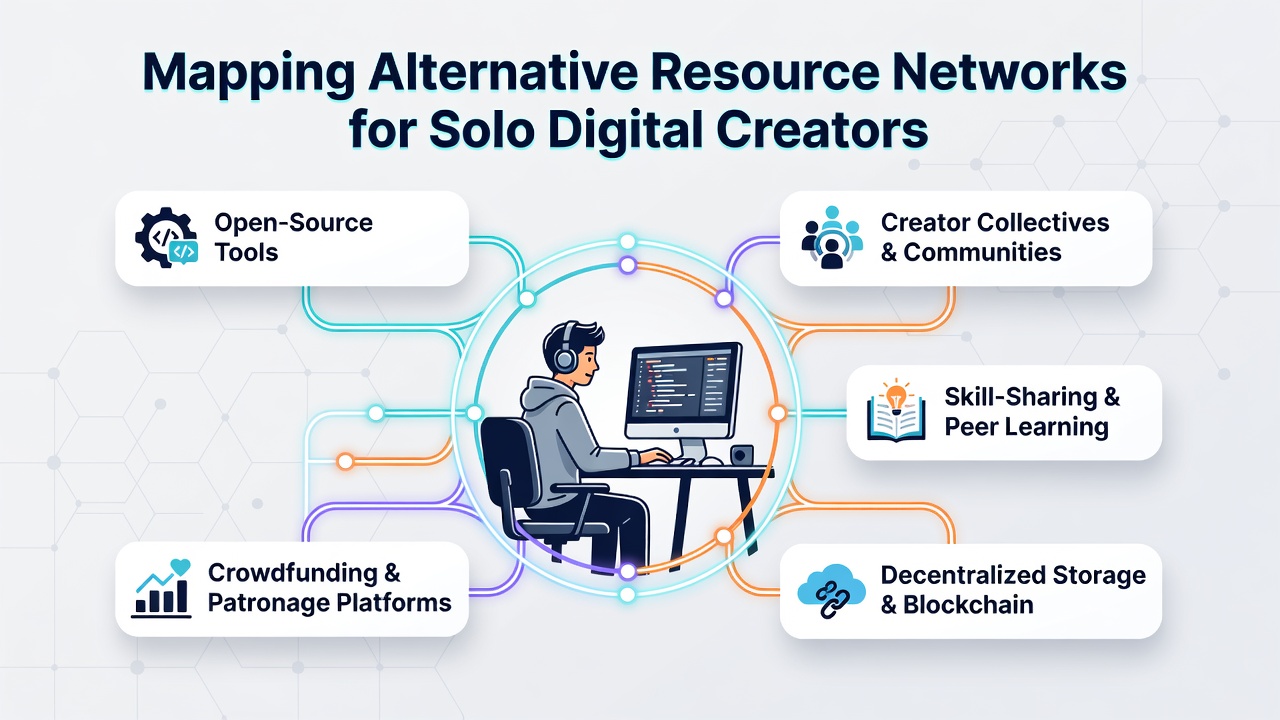
Mapping Alternative Resource Networks for Solo Digital Creators
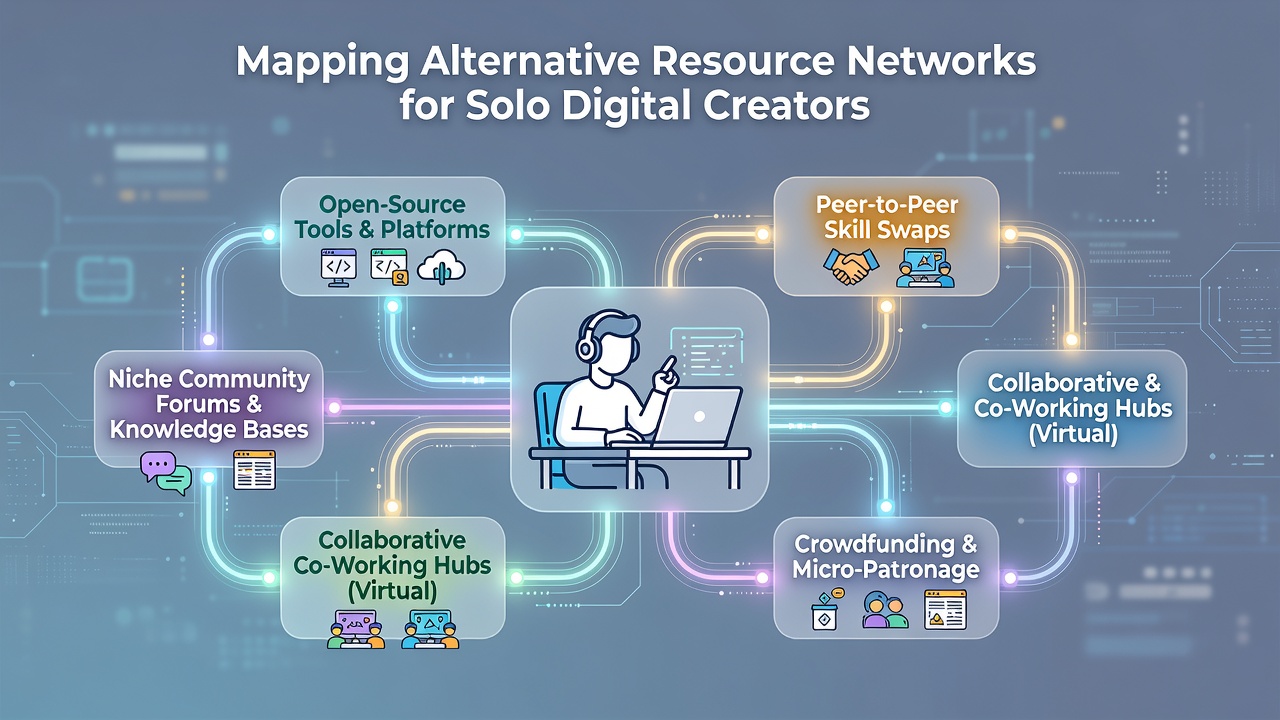
Mapping alternative resource networks involves tracing connections between open platforms, community-driven tools, and non-traditional funding streams that solo digital creators rely on for sustainability. Researchers have documented how these networks differ from conventional media ecosystems because they emphasize peer exchange and modular access rather than centralized gatekeepers. Data from multiple studies shows that creators often combine free software repositories, collaborative learning forums, and decentralized marketplaces to maintain operations without large institutional backing.
Core Components of Alternative Networks
Experts identify several recurring elements within these networks including shared code libraries, volunteer-moderated knowledge bases, and micro-grant systems operated by creator collectives. One analysis released in October 2026 by the European Commission's digital economy unit highlighted growth in cross-border tool sharing among independent operators across member states. Those who've examined participation patterns note that creators frequently link resources through public APIs and open documentation rather than proprietary services. This approach allows individuals to switch components when one provider alters terms or availability.
Studies conducted by academic teams at institutions in Canada and Australia reveal that resource mapping often starts with inventorying existing skills then matching them against available community assets. Figures from the Organisation for Economic Co-operation and Development indicate that solo creators in OECD countries increasingly document their own network diagrams to identify gaps in funding access or technical support. The process relies on simple spreadsheets or graph visualization software that remains accessible without subscription costs.
Techniques Used for Network Mapping
Observers describe several established techniques that creators apply when charting these systems. Network graphing tools built on open-source libraries let users plot relationships between platforms and collaborators in visual form. Researchers at various universities have tested automated scripts that pull public data from forums and repository sites to generate initial maps before manual refinement occurs. People who maintain ongoing records typically update these maps quarterly to reflect platform policy changes or new community initiatives.
Turns out the most durable maps incorporate both quantitative metrics such as download counts for shared assets and qualitative notes about reliability gathered from user forums. Data shows that creators who combine these inputs produce more accurate representations of where resources cluster and where isolation risks appear. Government statistical agencies in several regions have begun releasing anonymized datasets on digital creator activity that further support this mapping work.
Observed Patterns in Resource Distribution
Recent examinations of creator behavior indicate clusters around specific categories of resources. Educational content repositories and collaborative coding spaces appear most densely connected in current maps. Reports compiled by research groups in the Asia-Pacific region demonstrate that creators in those markets often route around traditional advertising networks by linking directly with regional micro-patronage platforms. Evidence suggests similar patterns emerging in North American and European contexts though the specific platforms vary by language and regulatory environment.
One study tracking activity through 2026 found that alternative networks expand most rapidly when creators publicly share their mapping methods rather than keeping them private. This sharing creates feedback loops where additional participants contribute new nodes and connections. Statistical agencies tracking labor markets have noted corresponding increases in reported self-employment within digital content categories that align with these network expansions.
Integration With Broader Digital Infrastructure
Alternative resource networks do not operate in isolation from wider digital systems. Creators routinely connect their mapped resources to mainstream hosting providers and payment processors while maintaining backup pathways through community alternatives. Data collected by international trade organizations shows that such hybrid approaches reduce downtime risks when single services experience outages. Mapping exercises help identify which connections carry the highest traffic volume and therefore require redundancy planning.
Those documenting these integrations often include timestamps and change logs so future updates remain traceable. University research projects have used these logs to analyze how network resilience correlates with creator longevity in the field. The resulting datasets support further refinement of mapping protocols for new entrants.
Conclusion
Mapping alternative resource networks supplies solo digital creators with structured views of available support systems that extend beyond standard commercial channels. Information gathered through systematic documentation continues to inform both individual strategies and broader policy discussions as of late 2026. Continued collection of usage data from diverse geographic sources strengthens the accuracy of these maps over time.