Tina Schmid · 21 September 2026
Decoding Visitor Interaction Patterns in Independent Online Spaces Through Advanced Flow Mapping
Independent online spaces rely on detailed examination of how visitors move through pages, and advanced flow mapping provides structured ways to capture those movements without relying on large platform algorithms. Analysts compile session data from server logs and client-side scripts to trace entry points, exit behaviors, and intermediate clicks that reveal navigation habits across standalone sites.
Core Components of Flow Mapping Systems
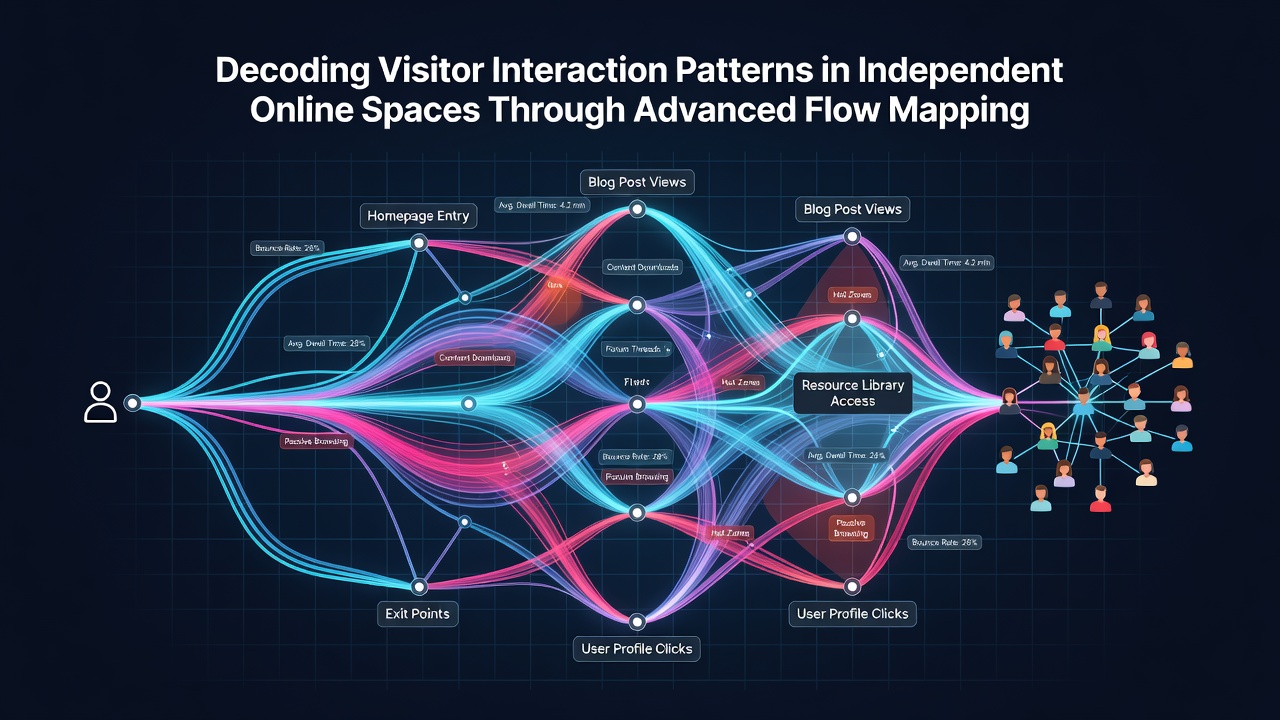
Flow mapping starts with collection layers that record timestamps, referrer information, and device identifiers while respecting privacy protocols in place since earlier regulatory updates. Tools segment paths into nodes that represent individual pages or actions, then connect those nodes with weighted lines indicating frequency and duration of transitions. Researchers apply clustering algorithms to group similar journeys, which highlights common sequences such as landing on a homepage followed by category exploration before reaching checkout or contact forms.
September 2026 figures from multiple analytics providers show increased adoption of these layered mapping approaches among smaller operators who seek to optimize without third-party cookie dependencies. Data streams feed into visualization platforms that render Sankey diagrams or node-link graphs, allowing teams to spot drop-off points where traffic volume decreases sharply between stages.
Integration with Existing Analytics Infrastructure
Operators combine flow mapping outputs with standard metrics such as bounce rates and time-on-page to build fuller pictures of engagement. Event tracking scripts capture micro-interactions like scroll depth and form field focus, then feed those signals into the same mapping engine for correlation. This approach lets analysts compare patterns across different traffic sources, separating direct visits from referral or search-driven arrivals in independent environments.
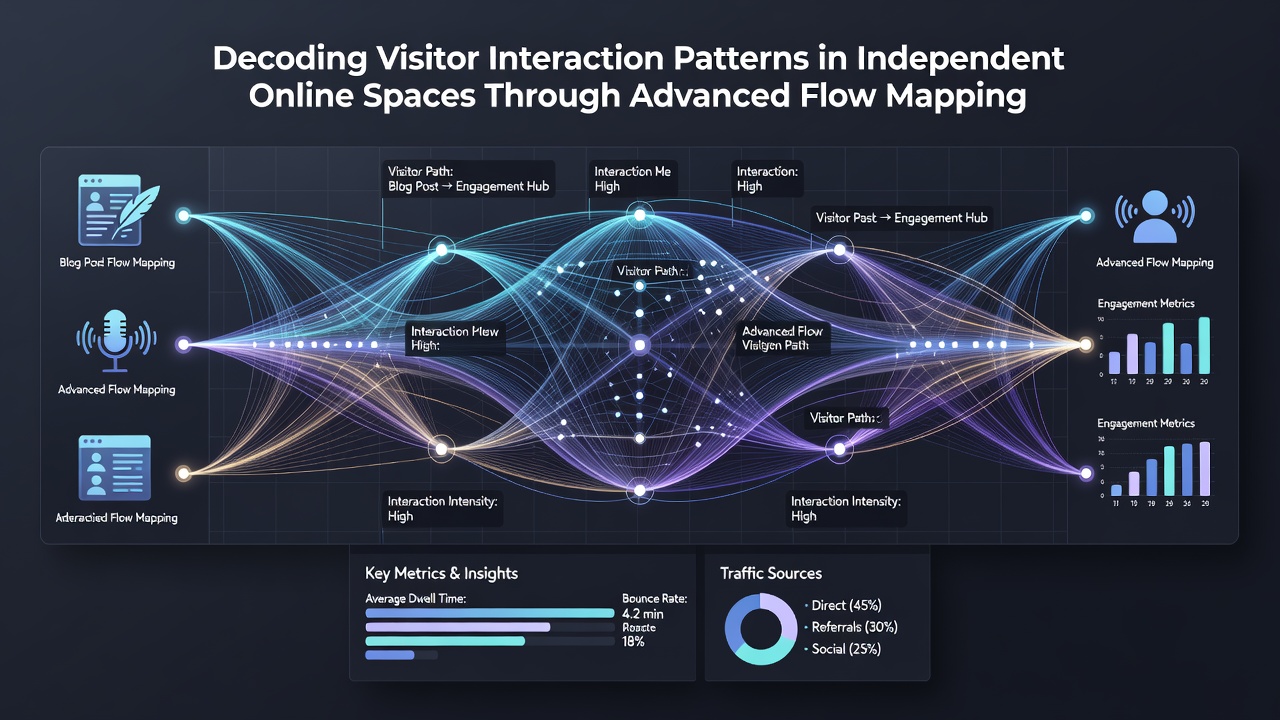
Independent sites often operate with limited resources, so mapping solutions emphasize lightweight implementations that run alongside existing content management systems. Database queries pull historical path data for batch processing, while real-time dashboards update as new sessions arrive, giving immediate visibility into emerging behaviors during campaigns or content updates.
Analytical Techniques Applied to Path Data
Sequence mining identifies frequent subsequences within visitor trails, revealing whether users follow linear progressions or branch into multiple content areas before converting. Transition probability matrices calculate teh likelihood of moving from one page to another, which supports forecasting of future traffic distribution across site sections. Those who maintain independent properties apply these probabilities to test layout adjustments and measure resulting shifts in path distributions.
According to Pew Research Center reports on digital navigation trends, users of smaller sites exhibit distinct looping behaviors compared with major platform visitors, returning to earlier sections more often during information gathering phases. Mapping software flags these loops automatically, enabling operators to reduce redundant content or strengthen internal linking structures.
Regional Data Sources Informing Global Patterns
Studies compiled by the Australian Bureau of Statistics on online service usage provide benchmarks for path completion rates in regional markets, showing variations tied to connection speeds and device types prevalent in those areas. Cross-referencing such figures with local server logs helps independent operators adjust expectations for session lengths and interaction density. European data agencies similarly publish aggregated web analytics summaries that highlight seasonal fluctuations in visitor progression through standalone digital properties.
Pattern detection extends to cohort analysis, where groups defined by acquisition date or entry keyword receive separate flow maps to uncover differences in exploration depth. This segmentation reveals whether newer visitors follow shorter paths or engage more broadly before leaving, informing content placement decisions without requiring large sample sizes.
Conclusion
Advanced flow mapping supplies independent online spaces with actionable representations of visitor movement that go beyond surface-level metrics. By layering session records, transition probabilities, and regional benchmarks, operators gain structured views of interaction sequences that support targeted refinements. Continued refinement of these methods through 2026 and beyond keeps standalone sites responsive to actual user navigation habits observed across diverse traffic sources.