
David Sullivan · 5 October 2026
Behavioral Data Mapping for Small Website Operators Using Non-Proprietary Software
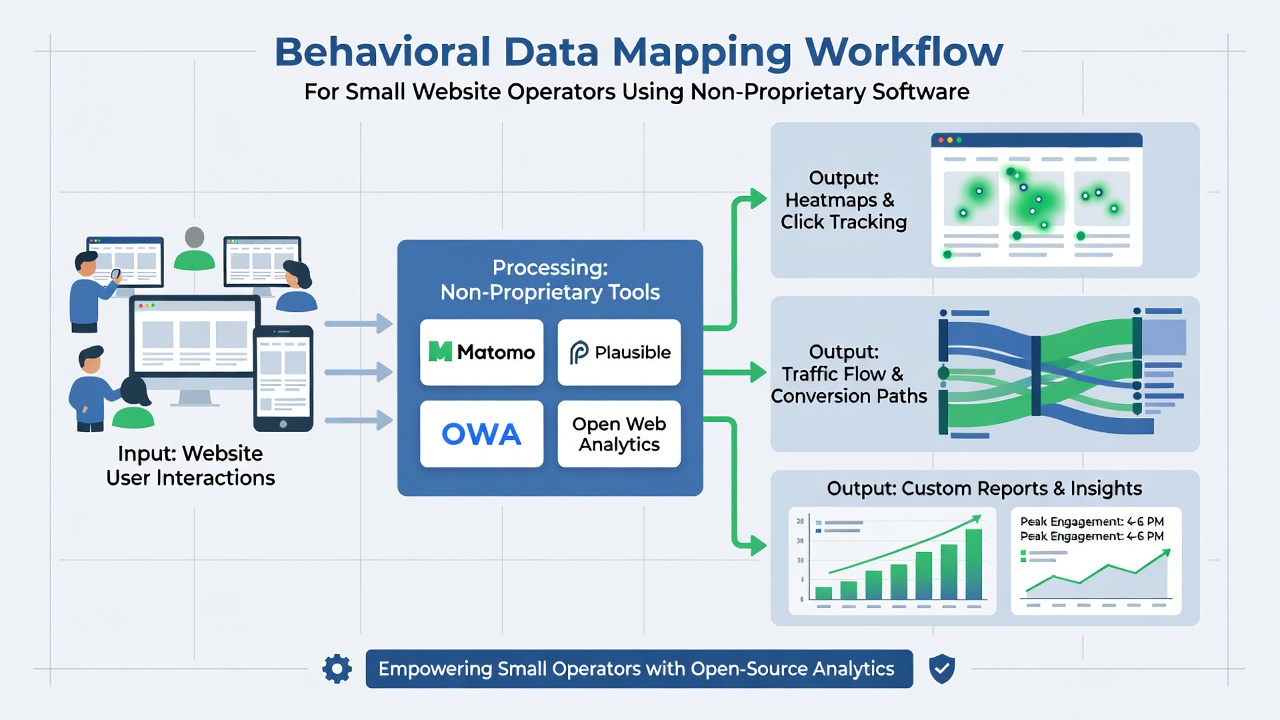
Behavioral data mapping involves tracking visitor actions across web pages to reveal navigation paths, engagement durations, and conversion sequences without relying on commercial platforms, and small website operators increasingly turn to non-proprietary software because these tools deliver similar insights at lower ongoing costs while supporting full data control on self-hosted servers. Observers note that open source options such as Matomo and similar frameworks allow operators to collect page views, event triggers, and session recordings directly, which then feed into custom visualizations that highlight user flows through menus, forms, and content sections.
Core Components of Behavioral Data Mapping
Data points collected include click coordinates, scroll depth percentages, time spent on individual elements, and referral sources, and when these elements combine into heatmaps or flow diagrams, patterns emerge that show where visitors drop off or linger longest. Researchers at various institutions have documented how such mappings help identify redundant navigation steps, and studies from academic groups in Canada indicate that sites using self-hosted analytics reduce bounce rates by adjusting layouts based on actual interaction logs rather than assumptions. Operators set up event tracking through JavaScript snippets that log actions like button presses or video plays, after which the software aggregates results into reports segmented by device type, geographic origin, and traffic channel.
Selecting and Configuring Open Source Tools
Non-proprietary platforms provide installation packages that run on standard web servers with PHP and MySQL backends, and configuration typically starts with defining goals such as newsletter signups or product page visits before activating tracking codes on every page. One documented approach involves integrating plugins for form analytics and link tracking, which capture additional variables like form abandonment rates and outbound click destinations, while built-in privacy features allow automatic IP anonymization and consent banner management to align with regional regulations. Data shows that teams who configure retention policies to delete raw logs after thirty days maintain compliance without losing aggregated trend visibility, and this setup proves especially useful for operators managing multiple small sites under a single dashboard instance.
Turns out the process scales efficiently because scripts run locally and avoid external API calls that could introduce latency or third-party data sharing risks, and administrators often schedule nightly exports to backup databases for long-term trend comparisons across months or years. What's interesting is how these tools support custom dimensions that tag sessions with campaign parameters or user cohorts, enabling queries that correlate specific marketing efforts with downstream behaviors like repeated visits or deeper content exploration.
Practical Implementation Steps for Site Operators
Implementation begins with server preparation where database tables are created to store events, followed by embedding tracking scripts in site templates and testing data capture accuracy across browsers, and operators then define funnel stages such as landing page arrival through to checkout completion to generate visual path analyses. According to reports from European research networks, sites that map these stages see measurable improvements in identifying friction points, after which targeted adjustments to button placement or content hierarchy produce clearer progression rates. Regular audits of collected fields ensure only necessary variables remain active, and this practice keeps storage requirements manageable even as monthly visitor numbers grow into the tens of thousands.
Contextual Developments Around October 2026
By October 2026 several jurisdictions plan to enforce updated data portability standards that favor self-hosted solutions because they simplify export requests and audit trails, and operators using non-proprietary mapping tools already maintain export functions that generate CSV or JSON files containing user interaction histories. Figures from industry associations reveal increasing adoption rates among independent sites as commercial analytics pricing models shift upward, and this trend encourages further development of community plugins that add advanced segmentation without additional licensing fees. Those who've studied adoption patterns note that training resources available through open source forums accelerate onboarding for teams without dedicated data analysts on staff.
Observed Outcomes and Pattern Recognition
Analyses conducted on mapped datasets frequently uncover correlations between entry pages and exit rates that prompt content reorganization, while session recording features allow playback of actual mouse movements to verify whether design changes achieve intended effects. One study revealed that sites incorporating scroll depth metrics into redesign decisions experienced higher average engagement times, and similar findings appear in reports issued by Australian academic centers focused on digital media consumption. External validation through Canadian government digital economy resources supports the value of transparent data practices when operators share aggregated insights with partners or stakeholders.
Another useful technique involves cohort analysis that groups visitors by acquisition date and tracks their return frequency over subsequent weeks, revealing retention curves that inform email or social media follow-up timing. Because the software runs without external dependencies, operators retain complete ownership of these longitudinal records and avoid disruptions from service changes or account terminations common with proprietary vendors.
Conclusion
Behavioral data mapping through non-proprietary software equips small website operators with detailed visibility into visitor interactions while preserving data sovereignty and controlling expenses, and the combination of event tracking, flow visualization, and privacy controls creates a sustainable framework for ongoing optimization. As October 2026 approaches and regulatory expectations evolve, sites equipped with these self-managed systems stand positioned to meet compliance demands without sacrificing analytical depth. Continued community contributions to open source projects further expand available features, ensuring that even modest operations can apply rigorous pattern analysis to improve navigation, content placement, and conversion pathways based on verifiable interaction evidence.